Importance of Time Management Across Employees, Freelancers, Individuals, Businesses and Corporate Organizations
References
Claessens, B. J. C., van Eerde, W., Rutte, C. G., & Roe, R. A. (2007). A review of the time management literature. Personnel Review, 36(2), 255–276. ; Market.biz. (2025). Workplace time management trends and statistics report 2025. ; Zipdo. (2025). Time management and workplace productivity statistics 2025 report. ; Ali, S. (2019). Benefits of effective time management in the workplace: An empirical study. International Journal of Management (IJM). ; Akintayo, D. I., Shadare O. A., & Olaniyan, T. S. (2023). The impact of effective time management on business performance in the Nigerian banking industry. Current Journal of Human Resource Management. ; Amelia, R., & Hidayani, H. (2025). Impact of time management; analysis of performance and life balance in workers. Jurnal Dividen. ; Yunus, M., Adam, M., & Sahputri, Y. (2025). The influence of workload, self-efficacy, and time management on job satisfaction and employee performance. International Journal of Research and Innovation in Social Science. ; Ziekye, J. (2015). Impact of time management on organizational effectiveness. Texila Journal.
Time management remains a central factor in workplace productivity, employee well-being, and organizational effectiveness. Scholars and practitioners consistently emphasize that time management is more than merely scheduling tasks—it involves strategic planning, prioritization, and the elimination of inefficiencies.
M. Mancini (2003) highlights that effective time management goes beyond the use of tools and schedules. It encompasses setting priorities, avoiding procrastination, organizing tasks, delegating responsibilities, anticipating obstacles, learning to say no, and eliminating time-wasting habits. Mancini stresses the need to balance efficiency with effectiveness, particularly for knowledge workers who require time to think, innovate, and create. Implementing these strategies improves productivity, reduces stress, and promotes a more organized and balanced professional life.
Data from 2025 workplace surveys indicate that employees lose an average of 1.8 hours daily to inefficiencies, while 70% report wasting at least 30 minutes per day due to poor time management practices (Zipdo, 2025). Additionally, 25% identify poor time management as a major source of stress, and 72% associate effective time management with improved work–life balance (Market.biz, 2025). These information tells us that time management is not merely an individual skill but a strategic organizational competency that affects profitability, goal achievement, stress reduction, and long-term sustainability.
Earlier research by Macan (1994)tested a process model of time management using data from 353 employees and supervisor performance ratings. The study found that certain time management behaviors were associated with reduced job tension and increased job satisfaction, although they did not directly improve job performance. Furthermore, the study found limited evidence supporting the effectiveness of time management training in improving performance, challenging the assumption that time management automatically translates into higher output.
Ida Sabelis (2001) offers a critical perspective on organizational time management, emphasizing that the conventional literature often overlooks contextual and subjective factors. By analyzing a chief executive’s experience, Sabelis suggests that time management concepts can be too narrow and may not capture the complexity of real organizational life. Her study highlights the importance of considering temporal markers beyond schedules, such as the pace of organizational routines and the social construction of time.
Claessens et al. (2007) provide a comprehensive review of time management literature, showing that time management behaviors relate positively to perceived control of time, job satisfaction, and health, while negatively correlating with stress. However, the link between time management and actual performance outcomes remains unclear. Time management training appears to enhance skill acquisition, but this does not automatically transfer into improved performance.
A more recent systematic review (2025) analyzed 107 empirical studies in higher education and workplace settings to identify evidence-based strategies for productivity and well-being. Despite widespread recognition of time management’s importance, the review noted inconsistent definitions and measurement across research. The study found that planning, goal-setting, prioritization, and task organization were consistently associated with improved performance, productivity, and well-being. These findings provide practical guidance for both educators and employers aiming to equip students and employees with the skills needed in increasingly demanding environments.
Recent surveys (Zipdo, 2025; Market.biz, 2025) provide updated empirical data demonstrating measurable productivity losses due to poor time allocation. These findings reinforce earlier theoretical models suggesting that structured time management improves task clarity, reduces cognitive overload, and enhances performance outcomes.
Time Management and Employees
Employees represent the foundational operational units of organizations. Their productivity directly influences institutional performance.
Employees wasting ≥30 minutes daily
70%
Widespread inefficiency
Average hours lost per day
1.8 hours
22.5% productivity reduction
Employees effectively managing time
35%
Majority lack structured planning
Time mismanagement correlates with psychological strain: (1) 25% of employees identify poor time management as a major stressor (Zipdo, 2025). (2) 41% report feeling overwhelmed by workload demands. Time planning reduces last-minute pressures and enhances perceived control, which psychological research associates with lower stress levels.
These figures suggest that improved time management training could substantially increase workforce efficiency.
Time Management in Corporate Organizations
At the corporate level, time management affects workflow coordination, profitability, and strategic competitiveness.
Average hours lost per employee per day
1.8
Total daily hours lost (500 employees)
900
Annual lost hours (250 workdays)
225,000
Project Delays
Resource Misallocation
Reduced Interdepartmental Coordination
The financial implications of this inefficiency can reach millions in lost output. Corporate sustainability depends on optimizing human capital. Time-tracking systems, digital task management platforms, and workflow audits have been associated with: (1) Improved deadline adherence, (1) Higher project completion rates, (3) Increased profitability margins. Time management thus becomes a strategic asset rather than merely an operational concern.
Time Management and Freelancers
Freelancers operate without institutional structure, making self-discipline central to professional success.
For freelancers, time directly translates into revenue. Poor scheduling can result in: (1) Missed deadlines, (2) Contract termination, (3) Client dissatisfaction.
Freelancers often struggle with boundary management. Without deliberate scheduling: (1) Work hours expand unpredictably (2) Burnout risk increases, (3) Personal life integration declines.
Structured time-blocking enhances sustainability and long-term productivity. Freelancers who use structured planning tools report greater client retention and income stability.
Time Management and Individuals
Beyond professional environments, time management influences personal achievement and life satisfaction. Approximately 82% of high-performing individuals use structured time management tools (Market.biz, 2025). These tools include: (1) Task prioritization matrices, (2) Calendar scheduling, (3) Goal tracking systems.
Work–life Balance
72% Improvement
Reduced stress
25% reduction correlation
Improved Productivity
65–70% self-reported increase
Structured planning promotes accountability and measurable progress. These findings demonstrate that time management contributes to holistic well-being.
Time Management and Businesses
Businesses with time discipline and planning frameworks demonstrate improved outcomes, including goal fulfillment, efficiency, and competitive responsiveness. Structured time management contributes to employee job satisfaction and improved work–life balance. Time management enhances workers’ ability to meet deadlines, reduce overload, and allocate effort toward meaningful tasks.
Task Completion Rates
Increased Efficiency
Organizational Effectiveness
Improved Processes
Job Satisfaction
Higher Employee Engagement
In 2025’s digital economy, constant notifications, virtual meetings, and multitasking increase cognitive overload. Without structured planning systems, inefficiency becomes systemic rather than incidental.
Time management should therefore be reframed as a strategic organizational competency. Training programs, digital workflow systems, and corporate time audits can substantially reduce productivity loss.
Individuals
Enhances Focus
Reduces Stress
Improves Goal Achievement
Freelancers
Stabilizes Income
Improves Client Relationships
Employees
Improves Productivity
Reduces Burnout
Corporate
Drives Operational Efficiency
Increases Profitability
Organizations
Implement Digital Time-Tracking Systems
Provide Time Management Training Workshops
Conduct Quarterly Productivity Audits
Reduce Unnecessary Meetings
Individuals
Adopt Time-blocking Techniques
Prioritize High-Impact Tasks
Limit Digital Distractions
Establish Clear Work–life Boundaries
Time management is a multidimensional strategic competency with measurable effects across employees, freelancers, individuals, and corporate institutions. The 2025 statistical evidence reveals significant productivity losses associated with poor time allocation, alongside strong correlations between structured time management and improved well-being, profitability, and work–life balance.
Organizations that institutionalize time management systems stand to gain competitive advantage, while individuals who adopt structured planning techniques enhance both professional performance and life satisfaction. In an era defined by digital acceleration and performance pressures, time management is no longer optional, it is foundational to sustainable success.
Time Management and Organizational Performance
Peer-reviewed studies show strong connections between organizational outcomes and time management practices. Such findings affirm that time management ought to be integrated into operational strategy, not treated as an individual skill only.
Time Management and Human Resource Outcomes
Studies indicate that time management is intrinsically linked with employee job satisfaction, performance, and psychological well-being. These studies reinforce that time management is not merely a personal habit but a determinant of worker engagement and organizational effectiveness.
Time Management and Business Implications
Time management influences business and worker outcomes through several interrelated mechanisms:
Prioritization and Goal Clarity
Individuals and teams that prioritize tasks based on relevance and strategic importance tend to perform better.
Reduced Cognitive Load
Effective planning minimizes multitasking and interruptions, which research shows can negatively impact focus and performance.
Organizational Culture
A culture that values time discipline fosters collaborative planning, reduces unnecessary meetings, and encourages shared commitment to efficient workflows.
Time Management Challenges of 2025
1. Missed Deadlines and Poor Time Tracking
Many teams fail to meet deadlines because they lack proper visibility into task progress. Employees often underestimate how long tasks will take, or they forget to log work, leading to delays that cascade across projects. Without accurate time tracking, managers cannot see bottlenecks in real time, and last-minute firefighting becomes the norm.
According to Wrike, 57% of workers miss deadlines due to poor time management (Wrike, 2022), while the Project Management Institute reports that 43% of projects are delivered late (PMI Pulse of the Profession, 2021). This shows that missed deadlines are not occasional, they are a systemic problem affecting productivity, client trust, and employee morale.
Reduced Client Satisfaction and Trust
Financial Penalties or Contract Loss
Increased Stress and Burnout
Lower Team Morale
Increased Costs Due to Overtime or Rushed Work
A time management system can help thru: (1) Automated task and time tracking to prevent missed deadlines, (2) Real-time alerts and reminders for approaching deadlines, and (3) Dashboard visibility for managers to allocate resources efficiently.
2. Disorganized Task and Project Management
Disorganized project management occurs when teams lack a clear system to track tasks, priorities, and responsibilities. This often results in duplicated work, missed steps, and confusion about who is responsible for what. Employees spend time searching for information instead of completing tasks, reducing overall efficiency.
IDC reports that 39% of employees waste at least an hour daily searching for information due to disorganization (IDC, 2020), and PMI notes that disorganized projects can cost up to 20% of a project’s total budget (PMI, 2021). Such inefficiencies indicate that without proper organization, even high-performing teams can under deliver.
Wasted Time and Resources
Missed Deadlines and Lower-Wuality Output
Frustration and Reduced Morale Among Employees
A time management system can help thru: (1) Centralizes tasks, deadlines, and project priorities, (2) Visual dashboards to monitor project progress, and (3) Clear task assignment and accountability.
3. Lack of Insights for Decision-Making
Managers often make decisions without understanding where employees’ time is actually spent. When teams rely on memory, incomplete spreadsheets, or outdated reports, critical resource allocation decisions are based on guesswork. This can lead to overloading some employees while others remain underutilized.
Deloitte reports that only 32% of executives have real-time visibility into operations (Deloitte, 2020), while companies without data-driven time tracking spend 21% more on projects due to inefficiencies (McKinsey, 2021). Lack of insight affects both short-term task management and long-term strategic planning.
Misallocation of Resources Reduces Efficiency
Higher Project Costs Due to Inefficiencies
Delayed or Flawed Strategic Decisions
A time management system can help thru: (1) Generates detailed reports on time spent per task, project, or employee, (2) Highlights bottlenecks and inefficiencies, and (3) Supports data-driven decision-making for better planning.
4. Inaccurate Payroll and Billing
Manual time tracking often results in errors when calculating payroll or invoicing clients. Employees may forget to log hours, misreport work, or submit time sheets late. These errors lead to disputes, employee dissatisfaction, and lost revenue.
The American Payroll Association estimates payroll errors cost U.S. businesses over $350 million annually (APA, 2022), and Software Advice finds that up to 30% of invoicing mistakes are due to manual time entry (Software Advice, 2021).
Employee Dissatisfaction from Incorrect Pay
Revenue Loss and Client Trust Issues from Billing Errors
Additional Administrative Workload to Fix Mistakes
A time management system can help thru: (1) Automates time tracking for accurate payroll and billing, (2) Generates precise reports for employees and clients, and (3) Integrates with accounting systems to reduce errors and administrative effort.
5. Limited Team Visibility
Managers often lack insight into who is working on what, especially in large or remote teams. Without visibility, tasks may overlap, be neglected, or be completed inefficiently. Employees feel disconnected, and managers struggle to balance workloads.
Workplace Trends Survey reports that 43% of employees feel managers don’t know what they’re working on (Workplace Trends, 2022), and Harvard Business Review notes 54% of managers find monitoring remote teams difficult (HBR, 2021).
Mismanaged Workloads Leading to Overwork or Idle Time
Critical Tasks can be Overlooked, Delaying Projects
Decision-making Suffers Due to Incomplete Information
A time management system can help thru: (1) Real-time dashboards showing task progress and assignments, (2) Balances workloads efficiently, and (3) Increases accountability and transparency.
6. Inconvenient Tracking Methods
Using spreadsheets, paper logs, or manual tracking consumes time and is prone to errors. Employees may forget to enter hours or miscalculate work time, impacting payroll and productivity tracking.
TSheets by QuickBooks reports employees lose 2–3 hours weekly due to manual tracking (TSheets, 2020), and APA states 33% of timesheets contain errors (APA, 2022).
Significant Time Wasted on Admin tasks
Higher Likelihood of Payroll and Billing Errors
Employee Frustration and Disengagement
A time management system can help thru: (1) Automates time tracking via desktop or mobile, (2) Reduces errors and administrative work, and (3) Frees employees to focus on productive tasks.
7. Wasted Time on Manual Work
Employees often spend a significant portion of their workweek performing repetitive administrative tasks such as updating spreadsheets, generating reports, sending reminders, or logging hours manually. This reduces time available for actual productive work and strategic tasks.
Workfront Report found that the average employee spends 4 hours per week on manual admin tasks (Workfront, 2021), while McKinsey & Company estimates that organizations lose 20–30% of productive time due to inefficient workflows (McKinsey, 2021). The cumulative effect of these small inefficiencies can drastically slow project completion and increase operational costs.
Lower Overall Productivity and Delayed Project Timelines
Increased Employee Frustration and Disengagement
Higher Labor Costs for Tasks that Could Be Automated
A time management system can help thru: (1) Automates reminders, reporting, and time entries, (2) Reduces repetitive manual work, and (3) Allows employees to focus on higher-value tasks.
8. Low Productivity and Accountability
Without proper tracking, employees may procrastinate or under perform, while managers struggle to measure output accurately. This lack of accountability can lead to missed deadlines and uneven workload distribution.
According to Salary.com, 85% of employees admit to wasting time at work (Salary.com, 2020), and Gallup reports that teams with poor accountability are 50% less likely to meet deadlines (Gallup, 2021). This demonstrates that lack of accountability is a widespread productivity challenge in both remote and office settings.
Missed Deadlines and Substandard Work Quality
Managers Spend Excessive Time Micromanaging
Declining Team Morale and Trust.
A time management system can help thru: (1) Tracks individual contributions and task completion, (2) Provides clear visibility into time spent and progress, and (3) Encourages accountability and improves productivity.
9. Difficulty Managing Remote Teams
Remote or distributed teams make it harder for managers to monitor workloads, ensure timely completion of tasks, and maintain engagement. Without proper tracking, employees may feel disconnected from company goals, and critical tasks can go unnoticed.
Buffer Remote Work Report 2023 found that 39% of managers consider monitoring remote employees their biggest challenge (Buffer, 2023), and Gallup reports that 43% of remote workers feel disconnected from company objectives (Gallup, 2021).
Missed Deadlines and Duplicated Efforts
Reduced Engagement and Accountability Among Remote Workers
Increased Time Spent on Check-ins and Follow-ups
A time management system can help thru: (1) Tracks tasks and time in real-time, even remotely, (2) Provides dashboards showing team progress and workload distribution, and (3) Enhances communication, collaboration, and accountability.
10. Scattered Records and Lost Data
When records are stored across multiple systems, spreadsheets, or physical files, critical time, task, and project data can be lost or inconsistently recorded.
IDC found that 21% of employees regularly lose important documents (IDC, 2020), and AIIM estimates organizations spend $20,000 per employee per year recovering lost data (AIIM, 2021). This not only wastes time but can also jeopardize client relationships and compliance.
Time Wasted Searching for Information
Increased Risk of Errors and Missed Deadlines
Potential Legal or Compliance Issues
A time management system can help thru: (1) Centralizes all time, task, and project data, (2) Provides secure storage and easy retrieval of historical records, and (3) Reduces risk of lost data and ensures accurate reporting.
11. Compliance and Audit Challenges
Manual or inconsistent tracking makes it difficult to comply with labor laws, client contracts, or prepare for audits. Missing or incomplete data can result in financial penalties and reputation damage.
American Payroll Association reports that 46% of companies face fines due to improper labor tracking (APA, 2022), and Deloitte finds that 60% of audits fail their first review due to incomplete records (Deloitte, 2020).
Financial Penalties and Legal Exposure
Damage to Company Reputation with Clients or Regulators
Additional Administrative Effort to Correct Deficiencies
A time management system can help thru: (1) Maintains accurate, timestamped records for audits, (2) Automates compliance reporting, and (3) Simplifies audit preparation and reduces risk.
12. Overtime and Workload Imbalance
Without proper tracking, some employees may overwork while others remain underutilized, leading to burnout and disengagement.
Bureau of Labor Statistics reports that 23% of employees work more than 50 hours per week, often without proper tracking (BLS, 2022), and Gallup finds that 77% of employees experience burnout due to workload imbalance (Gallup, 2021). Overwork also increases labor costs and reduces long-term productivity.
Employee Burnout and Turnover
Increased Labor Costs Due to Untracked Overtime
Reduced Overall Productivity
A time management system can help thru: (1) Monitors hours worked and flags overwork, (2) Helps managers balance workloads fairly, and (3) Reduces burnout while maintaining productivity
13. Lack of Customization
Off-the-shelf time tracking and project management systems often do not match a company’s workflows, causing inefficiencies. Employees may need to adjust their workflows manually, which adds complexity and reduces adoption.
Forrester reports that 63% of companies experience inefficiencies due to software that does not fit their processes (Forrester, 2021), and 45% of employees manually adjust workflows due to rigid systems.
Inefficient Workflows and Wasted Time
Resistance to Adopting the Software Fully
Delays in Project Completion and Increased Errors
A time management system can help thru: (1) Offers customizable dashboards, task types, and reporting options, (2) Integrates seamlessly with existing workflows, and (3) Ensures higher adoption and maximizes efficiency.
Time Management and Productivity Statistics
Ready to work smarter with your time?
Try Time M.A.N. today and turn
hours into results!


Free, Professional Time Management App for Individuals, Teams, Businesses and Organizations
Simplify your day. Stay focused. Achieve more.
Time M.A.N. is a clean and professional time management app built for individuals, freelancers, teams, businesses and organizations who value structure, clarity, and productivity. Plan tasks, collaborate with your team, track goals, and manage your time placed all in one intuitive platform.
Start free today. No credit card required.
Take Control of Your Time, Effortlessly
Most people struggle with productivity not because they lack motivation, but because their tools are cluttered, complicated, or overwhelming.
Whether you are:
- An individual trying to organize daily tasks
- A freelancer juggling multiple clients
- A team coordinating projects
- A business tracking goals and deadlines
Time M.A.N. helps you stay organized, focused, and productive without the noise.
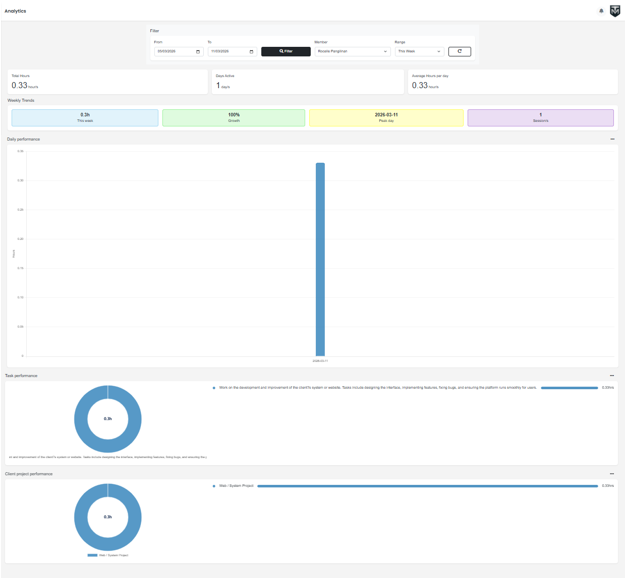
Time M.A.N is designed around clarity, structure, and results. Every feature is built to help you focus on what matters, reduce stress, and increase measurable productivity. Whether you’re an individual, freelancer, or team, these tools make your workflow simple, professional, and effective.
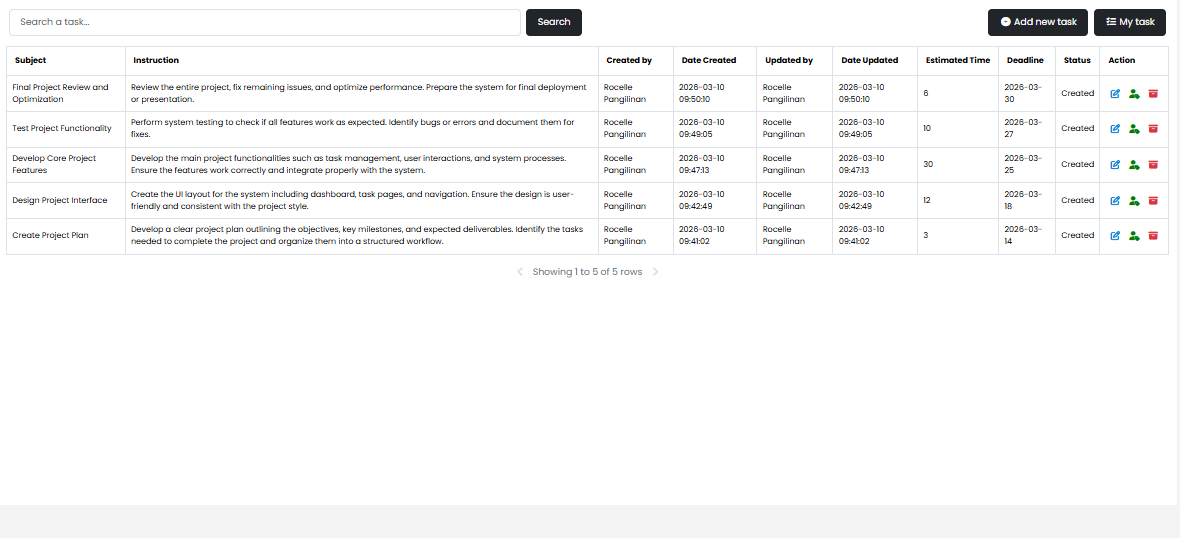
Smart Task Management
Easily organize your tasks by priority, project, or deadline. Break complex projects into simple steps, assign sub-tasks, and track progress in a clean, professional interface.
Time M.A.N. is perfect for anyone looking for a free time management app or professional task management software that actually works.
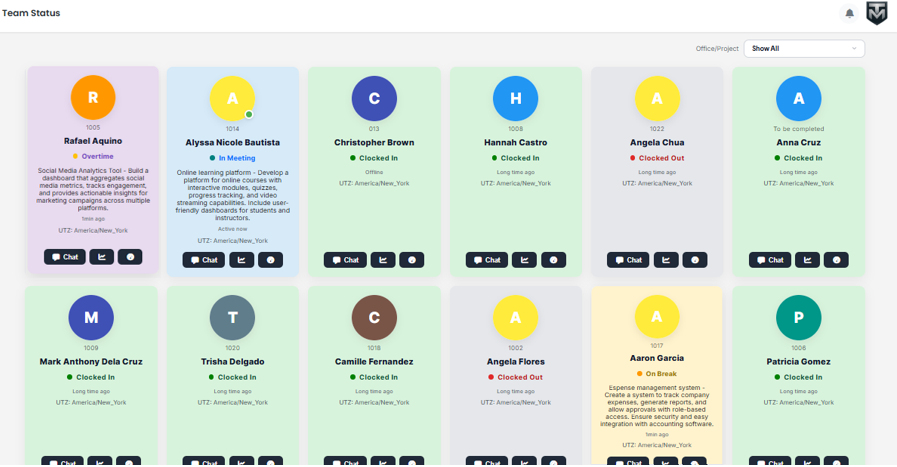
Team Collaboration Made Simple
Work together without confusion. Assign tasks, monitor progress, and maintain transparent workflows and all without overwhelming dashboards or endless emails.
Key Benefits:
- Clear accountability for every team member
- Smooth project coordination and communication
- Faster results with less friction
Looking for a productivity app for teams? Time M.A.N. keeps collaboration simple and professional while supporting teams of any size, from startups to established organizations.
Focus Mode for Deep Work
Turn your plan into action with distraction-free focus sessions. Track dedicated work time for each task and improve task completion rates naturally.
Time M.A.N. focus mode makes this one of the best tools for freelancers, professionals, and teams looking for a time management app that improves focus.
Goal Tracking and Alignment
Connect daily tasks to bigger objectives. Track progress, stay motivated, and maintain consistent achievement across personal and team goals.
Key Benefits:
- Align daily work with strategic goals
- Measure individual and team performance
- Build lasting productivity habits
Time M.A.N. helps individuals, teams, and businesses move from planning to execution while using a professional and simple productivity platform.
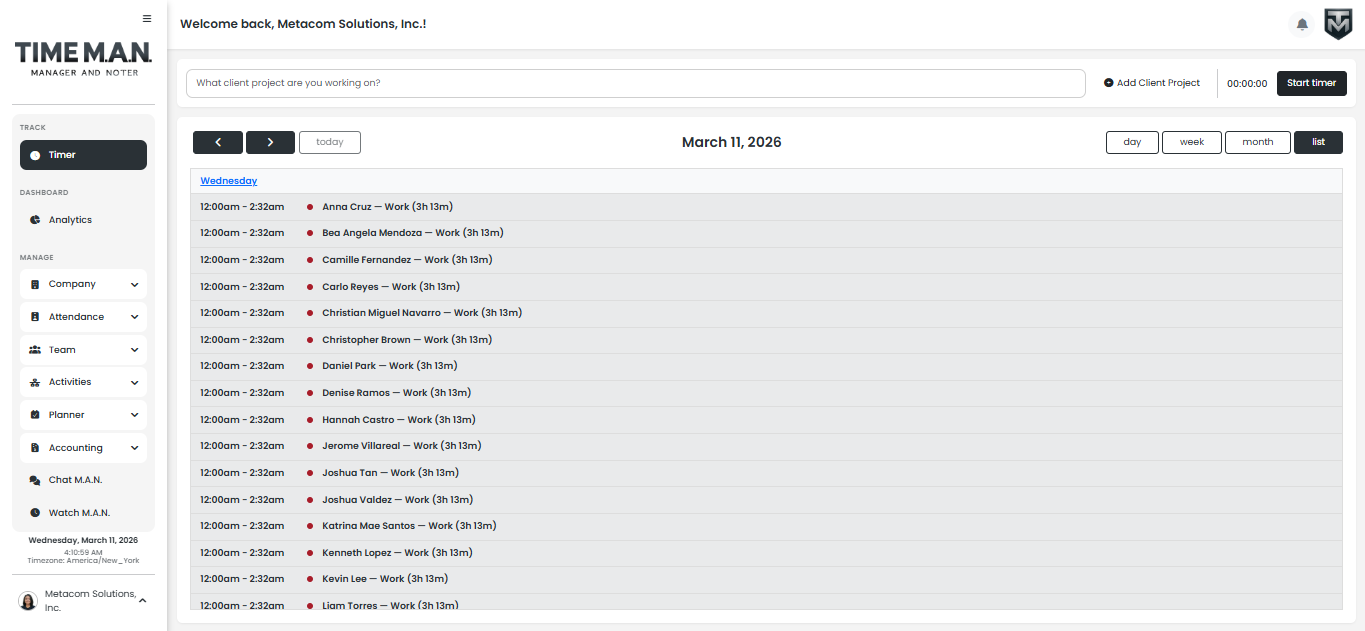
Get organized, stay focused, and boost your efficiency whether you’re managing personal tasks, coordinating team projects, or running an entire organization. Experience the best free time management app for individuals, teams, businesses and organizations.
Simple, Actionable Productivity Insights
See performance trends at a glance with dashboards that are easy to read, actionable, and uncluttered. Understand workload distribution, completion patterns, and progress toward goals.
Whether you are searching for a professional productivity app, team productivity tool, or task management software, Time M.A.N. insights are designed to guide improvement without complexity.
Every feature in Time M.A.N. is built for clarity, structure, and results. From smart task management and team collaboration to focus mode, goal tracking, and productivity insights, our app makes professional productivity simple.
Take control of your day with Time M.A.N., the free, professional time management app designed for simplicity and productivity.
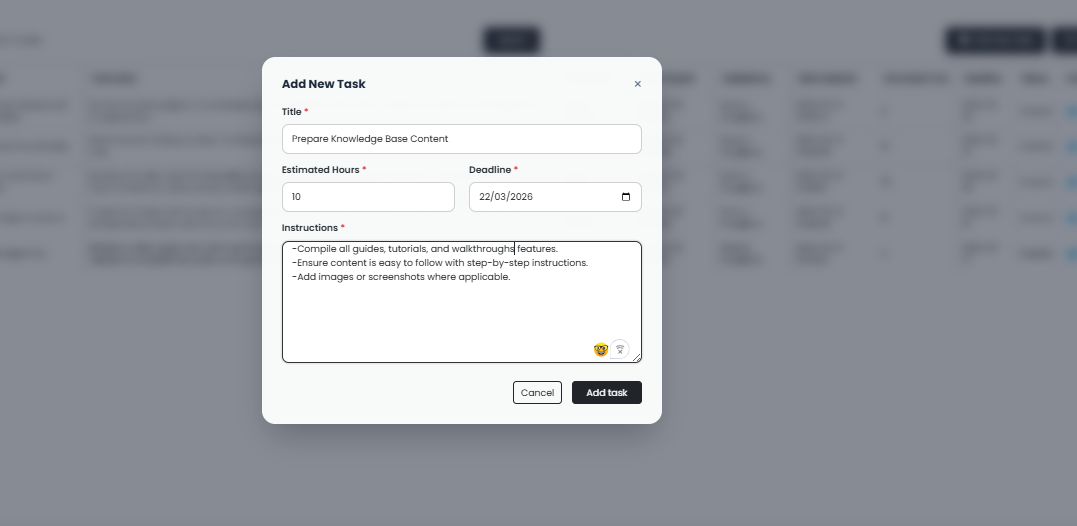
With simple task entry fields, adding, organizing, and tracking your tasks is fast and effortless.
Whether you’re managing personal priorities, coordinating team projects, or tracking work as a freelancer, this task management software makes planning, executing, and monitoring your work seamless.
Stay focused, meet deadlines, and achieve more every day with this easy-to-use productivity tool.
Professional Reporting and Documentation
Most time management apps help you organize tasks but few help you present results professionally.
With Time M.A.N., your task management and time tracking data can be instantly transformed into structured, printable performance reports. Generate clean summaries of completed tasks, deadline adherence, productivity trends, and billable hours all formatted for professional review and documentation.
Unlike many productivity tools that require exporting raw data or using third-party software, our built-in reporting feature makes it effortless to create presentation-ready reports directly from your workspace.
For teams, businesses, and organizations that value transparency and measurable results, this feature transforms your time management software into a complete execution and reporting solution not just a time and task tracker.
Self-Service Employee Data Entry for Smarter HR Operations
Manual employee data entry consumes valuable HR time and increases the risk of administrative errors. Time M.A.N. introduces a streamlined, minimal-entry system where staff securely submit and manage their own personal information.
HR teams can then verify and oversee submissions rather than manually inputting data reducing workload, improving data accuracy, and optimizing operational efficiency.
By shifting routine data entry away from HR and into a controlled self-service structure, organizations gain time, accuracy, and operational clarity.
Simple Yet Effective Productivity Tools
Productivity does not have to be complicated to be powerful. Time M.A.N. brings together simple yet effective productivity tools designed to help individuals, freelancers, teams, and businesses stay organized without unnecessary complexity.
From clean task entry and customizable focus timers to printable reports and structured time tracking, every feature is built with clarity in mind. No overwhelming dashboards. No feature overload. Just practical tools that help you plan, focus, execute, and measure your work efficiently.
Because real productivity is not about more tools, it is about the right tools, working together seamlessly.
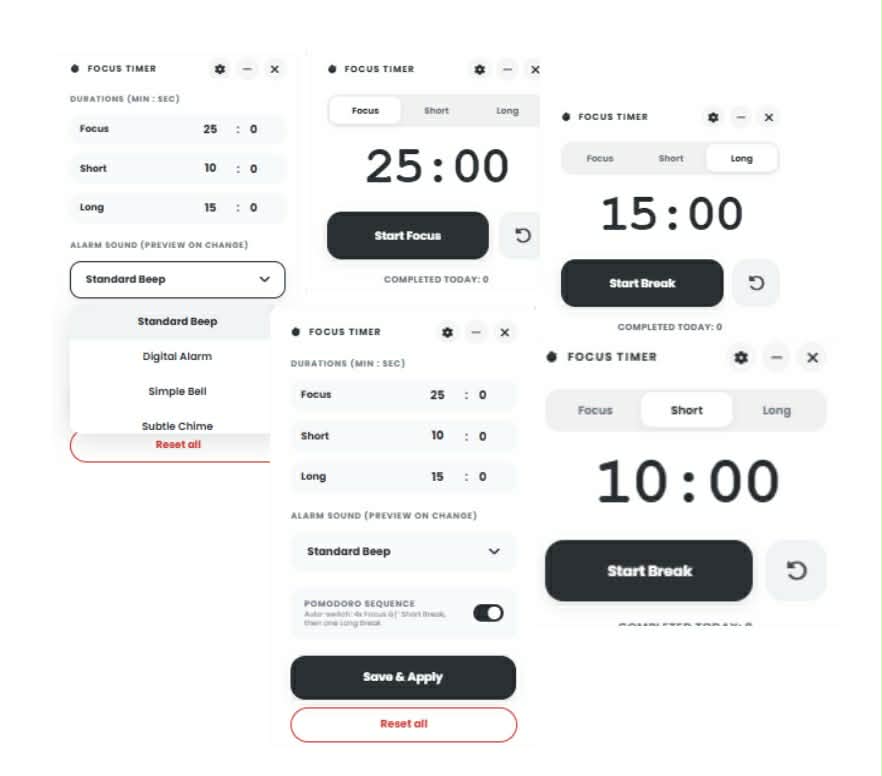
Custom Pomodoro Timer for Deep Focus
Boost productivity with a built-in, customizable Pomodoro timer designed to enhance focus and task execution. Set personalized focus sessions, manage break intervals, and align timed work periods directly with your task management system.
Ideal for individuals, freelancers, teams, and businesses seeking a professional productivity app, this integrated focus timer transforms your time management software into a complete deep-work and performance tool.
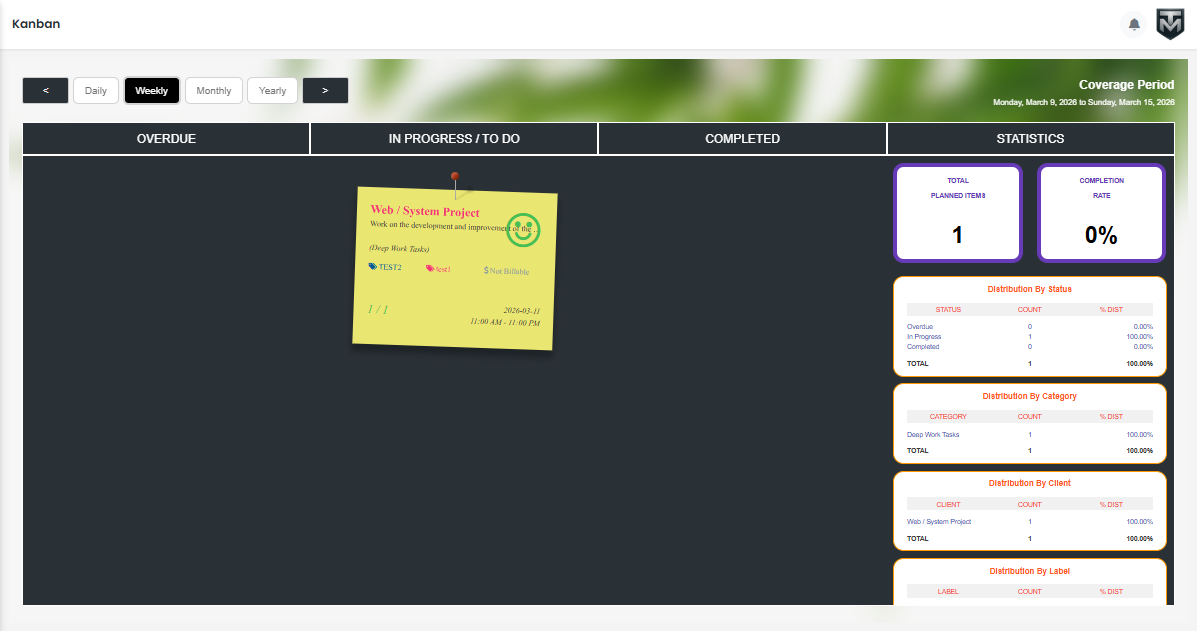
Personal Productivity Kanban Board for Work-Life Balance
Boost your daily productivity with a personal Kanban board that helps manage both work tasks and personal priorities. Plan, track, and complete tasks visually while maintaining balance between professional goals and personal life.
Ideal for individuals, freelancers, and professionals seeking a time management app that supports work-life balance, this Kanban board is simple, structured, and designed for real-life productivity.
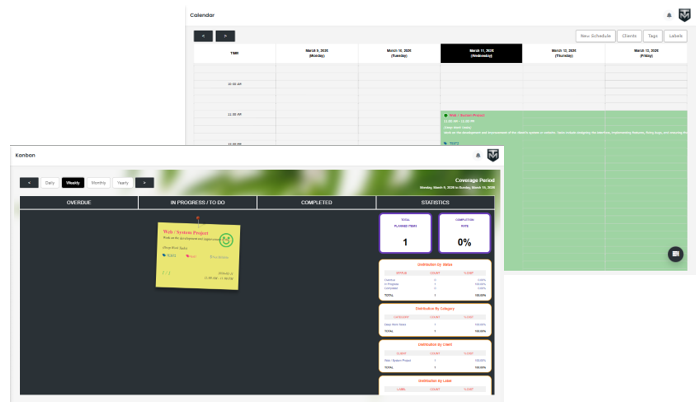
Weekly Planner with Block Scheduling for Work-Life Balance
Take control of your week with Time M.A.N.’s weekly planner featuring block scheduling. Allocate dedicated blocks of time for work tasks, meetings, personal projects, and self-care, giving each part of your life the attention it deserves. By visually segmenting your day, you reduce multitasking, prevent overbooking, and maintain a structured workflow that promotes focus and balance.
Unlike traditional planners that only list tasks, block scheduling helps you plan intentionally, ensuring professional responsibilities and personal priorities coexist harmoniously. Whether you’re an individual, freelancer, or professional managing multiple roles, this approach helps you stay productive without sacrificing personal time, creating a sustainable rhythm for work-life balance.
With Time M.A.N., we believe in simple yet powerful tools that help you stay organized, focused, and in control. Time M.A.N. is designed for individuals, freelancers, teams, and businesses looking for an intuitive solution to manage their time, tasks, and personal well-being, all in one place.
Integrated Messaging for Seamless Collaboration
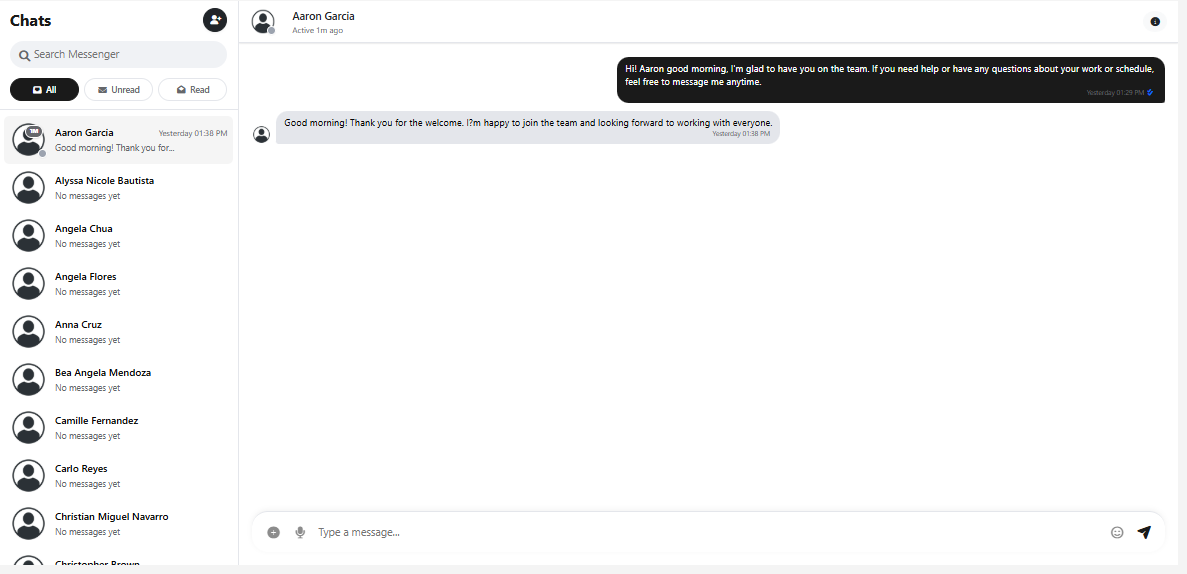
Stay connected with your team or clients directly within Time M.A.N.’s chat and messaging feature. Whether you’re coordinating tasks, discussing project updates, or sharing quick notes, our messaging tool integrates smoothly with your workflow keeping all conversations, files, and important communications in one place.
Perfect for teams and businesses, this built-in chat tool reduces the need for external communication tools, helping you stay focused, organized, and productive without the clutter.
For businesses and teams looking for productivity tools with integrated messaging, Time M.A.N. helps streamline communication and increase efficiency without the need for external platforms.
No more scattered conversations or lost emails. With our Time M.A.N.'s chat feature, everything you need to discuss is organized right alongside your tasks, so you stay aligned and productive.
Kiosk Mode for Seamless Time Tracking Updates
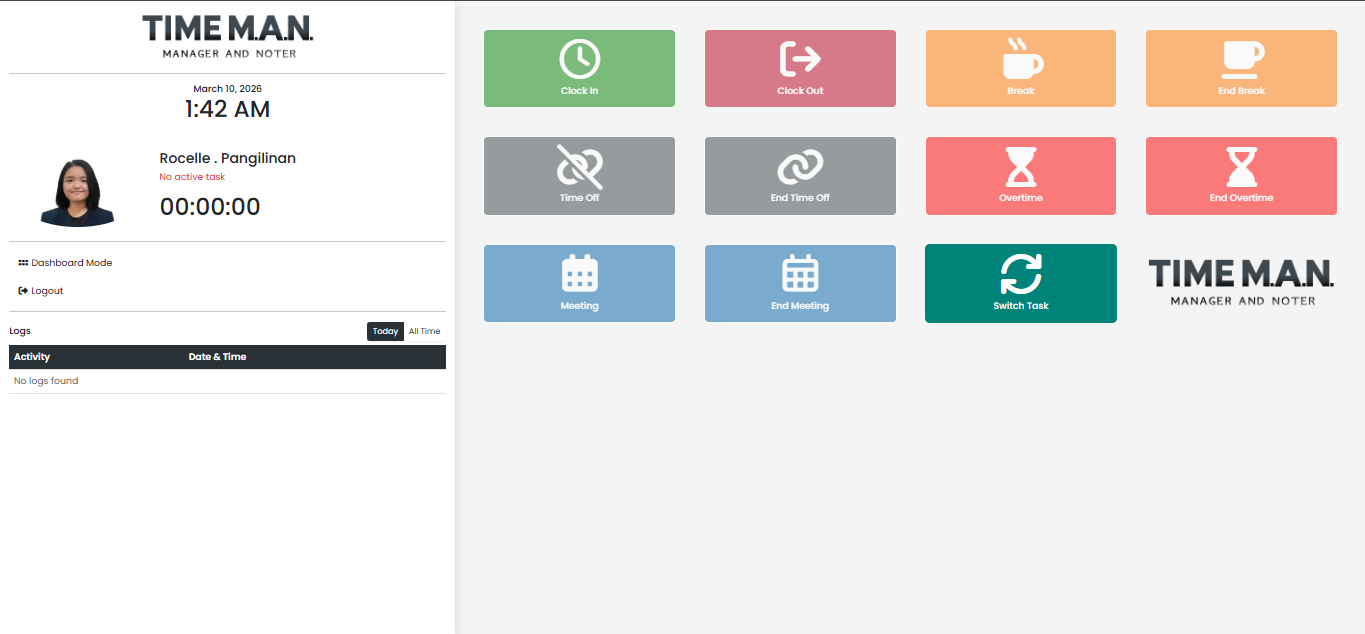
Simplify time tracking with Time M.A.N.’s Kiosk Mode, designed to offer quick and accurate status changes. Employees can easily toggle between statuses like time off, breaks, in meetings, or overtime with just one click, making it perfect for non-tech-savvy users.
This feature ensures that time tracking is accurate and real-time, reducing manual errors and making status changes fast and intuitive. Whether you're managing a remote workforce or a traditional office, Kiosk Mode keeps your time tracking organized and streamlined.
Looking for a time tracking app that’s simple for non-technical users? Time M.A.N.’s Kiosk Mode ensures that switching statuses (like breaks, overtime, or meetings) is just a click away, keeping your workflow smooth and your data accurate.
QR Code Bundy Clock for Secure and Automated Time Tracking
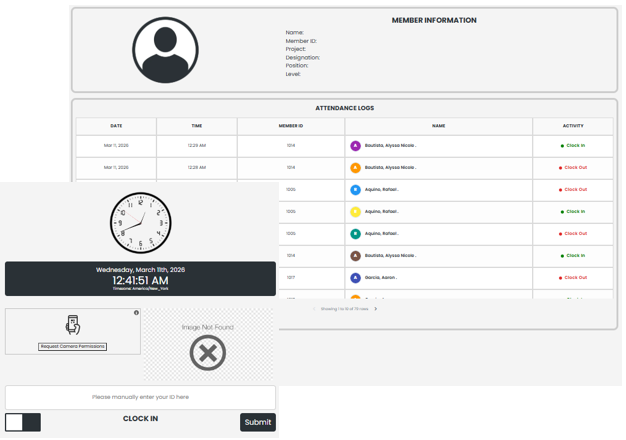
Time M.A.N.’s QR Code Bundy Clock simplifies attendance tracking with secure, automated clock-ins and clock-outs. Employees scan their unique QR code at designated entry points to instantly record their arrival and departure times.
Ideal for businesses with multiple entry points or routine employees, this system ensures accurate, tamper-proof attendance while reducing administrative work. Secure your timekeeping process with automated time tracking and eliminate manual errors.
For companies looking for a secure, automated attendance system, Time M.A.N. offers a QR Code Bundy Clock feature that records employee clock-in and clock-out times at multiple entry points, all while ensuring security and accuracy.
Virtual Workplace for Remote Team Engagement and Collaboration
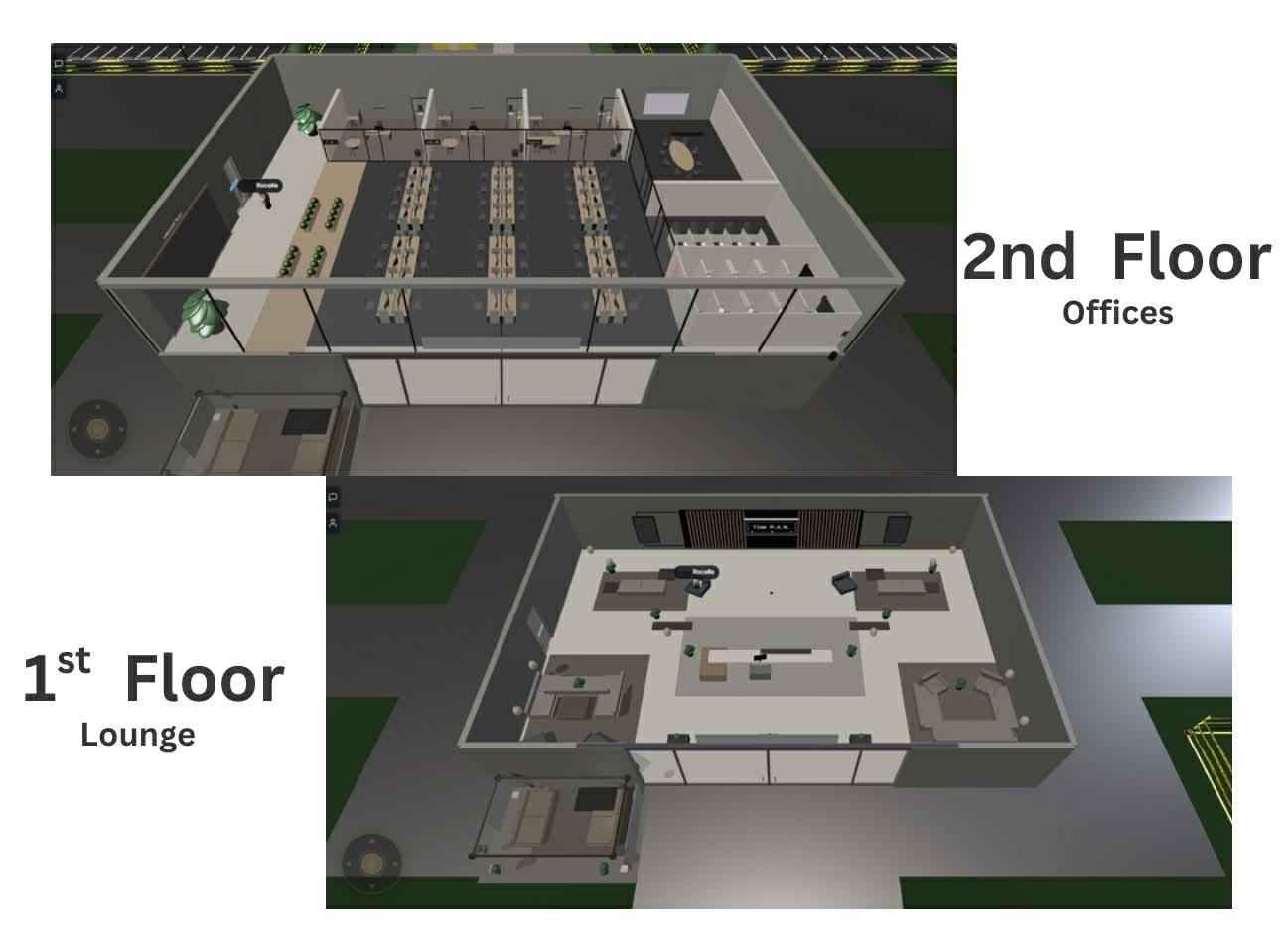
Keep your remote team connected and engaged with Time M.A.N.’s Virtual Workplace. This immersive, gamified environment allows employees to customize avatars, explore virtual spaces, chat with colleagues, and leave creative messages on the Freedom Wall, all while taking breaks or during downtime.
The Virtual Workplace mimics the social experiences of the office like chatting in the break room or brainstorming in the conference room creating an environment that feels connected, even from a distance. It’s an easy way to enhance employee engagement, build a strong remote company culture, and promote employee well-being.
For businesses looking to engage remote teams, Time M.A.N. provides a virtual workplace feature that enables employees to socialize, relax, and interact in a gamified virtual environment, improving collaboration, well-being, and company culture.
Experience the virtual office where remote employees can connect, collaborate, and unwind with customizable avatars, interactive spaces, and creative idea-sharing, all designed to bring back the social side of work.
Integrated Accounting and Payroll System for Employee Records
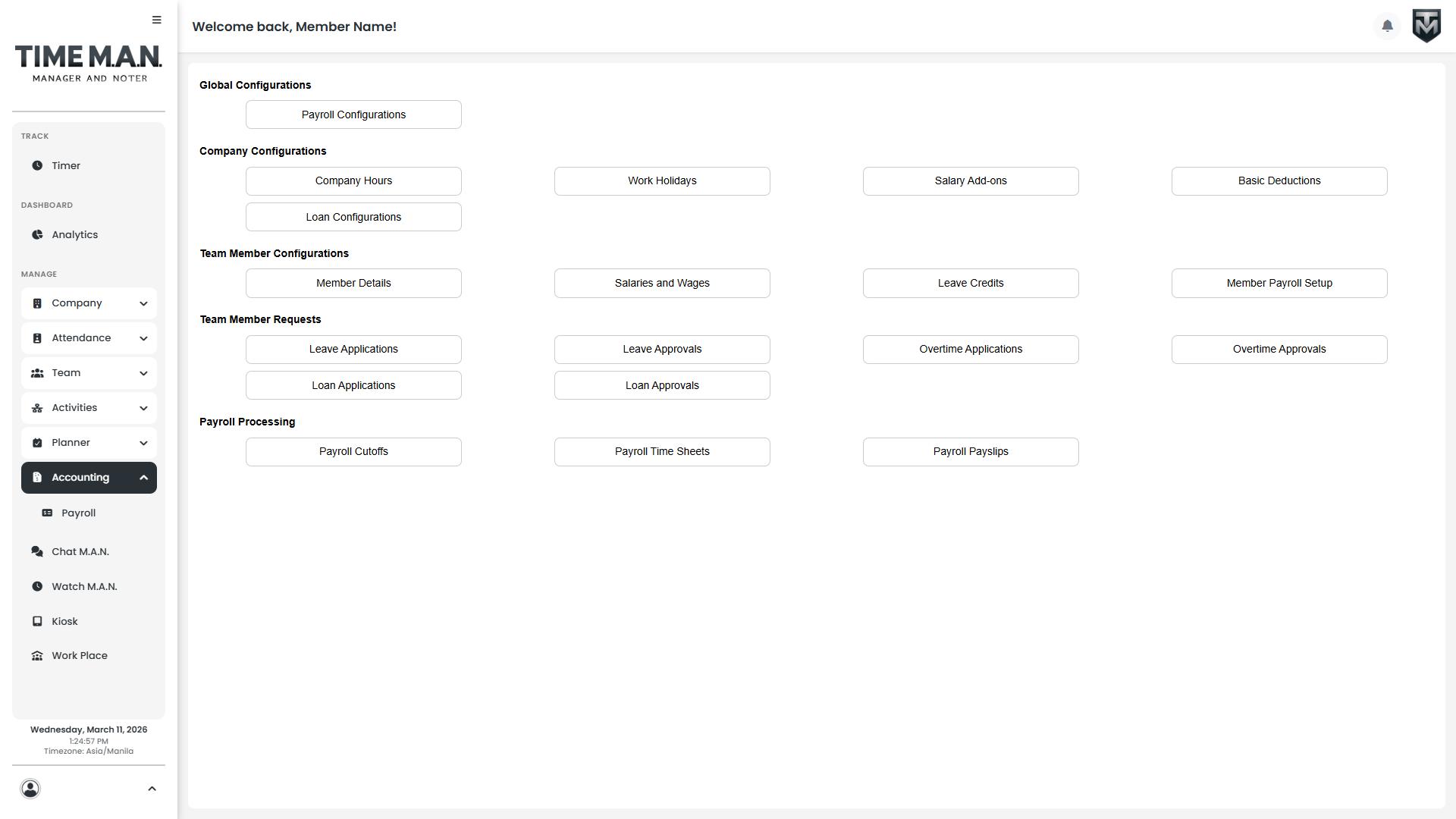
Time M.A.N.’s accounting module automates and simplifies the management of employee salaries, benefits, deductions, loans, time sheets, and payroll. Say goodbye to the complexity of manual calculations and third-party tools. This integrated feature allows businesses to track leave credits, generate payslips, and manage employee financial records with just a few clicks.
Whether you’re handling weekly payrolls, monthly deductions, or annual leave balances, our accounting module streamlines it all, ensuring your business stays organized, compliant, and efficient. With the ability to generate detailed payroll reports and manage employee loan deductions, this tool provides a comprehensive solution for your HR and accounting needs.
Looking for an all-in-one payroll and accounting system for your employees? Time M.A.N. offers an integrated accounting module for automated salary calculations, benefits, time sheets, and compliant payroll generation.
Personalized Features for Efficient Communication and Team Collaboration
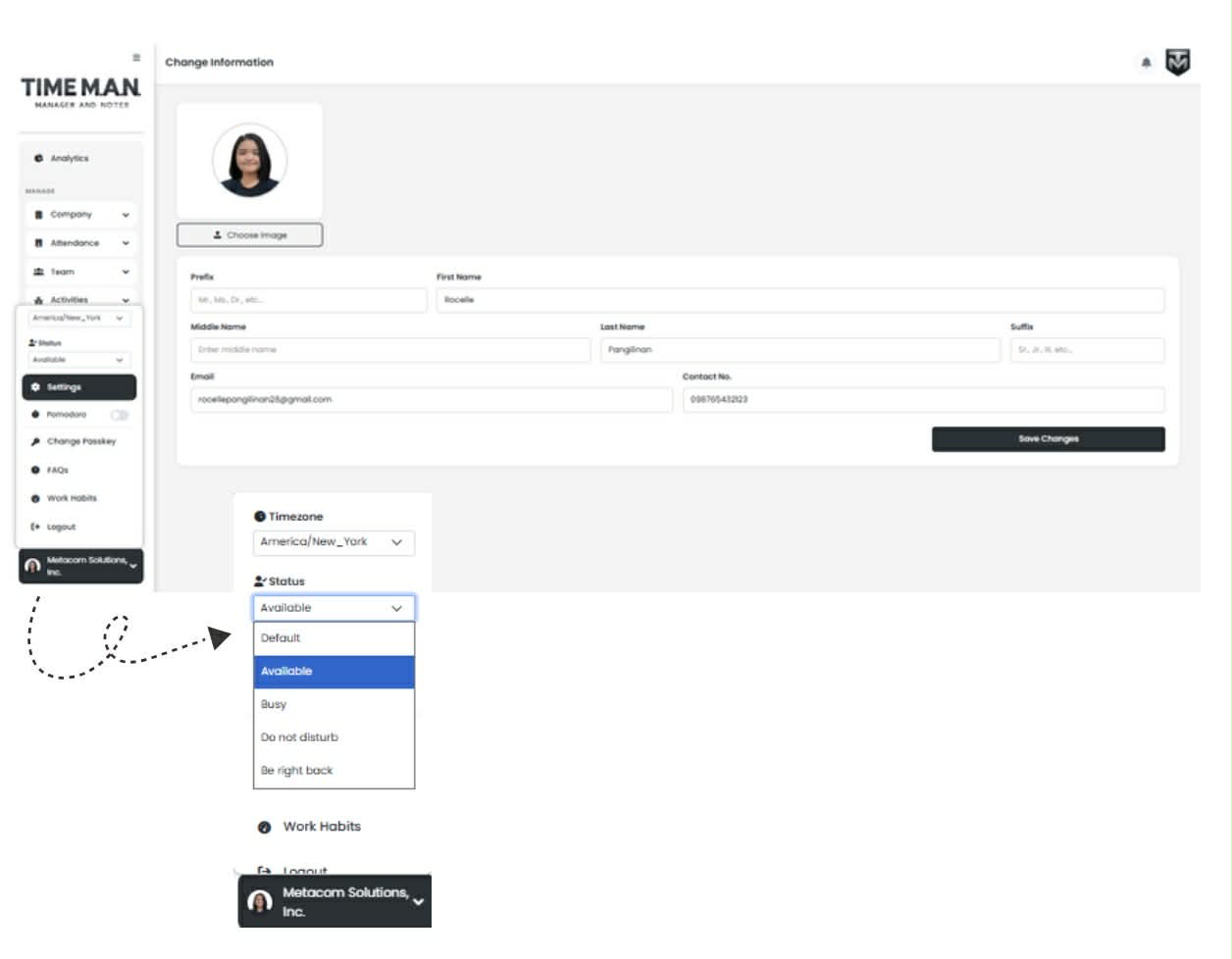
Time M.A.N. gives you the freedom to customize your profile for improved communication and collaboration. Choose a unique image avatar to represent yourself, set your timezone to sync with global teams, and update your online status (like "busy", "away", or "do not disturb") for transparent availability.
These small but powerful customization options ensure you’re always on the same page with your colleagues and help reduce communication friction, especially when working in distributed or remote teams. You can focus on your tasks while others know exactly when to reach out, preventing unnecessary distractions and fostering a more efficient work environment.
Looking for a personalized productivity app? Time M.A.N. allows you to customize avatars, set your timezone, and update your online status optimizing communication and collaboration for teams working remotely or across different time zones.
Make Time M.A.N. truly yours with image avatars, timezone settings, and the ability to update your online status perfect for improving communication, collaboration, and focus in remote teams.
Integrated Support Ticket System for Fast and Efficient Issue Resolution
Time M.A.N. offers an intuitive support ticket system that ensures all user issues and concerns are handled swiftly and efficiently. With this feature, users can submit tickets, track the status of their inquiries, and receive real-time updates on progress until their issue is fully resolved.
Designed to enhance the user experience, this system keeps your team organized while making sure every ticket is addressed promptly. It’s the perfect tool for businesses and apps looking to provide exceptional customer support while streamlining communication.
Looking for a support ticket system that integrates seamlessly into your app? Time M.A.N.’s ticketing system ensures quick and efficient issue resolution, keeping your users happy and your support team organized.
Resolve user issues fast with integrated support tickets, you can track progress, get real-time updates, and ensure no concern goes unnoticed with Time M.A.N.’s seamless support system.
Analysis That Turns Productivity Data Into Actionable Insights
Time M.A.N. includes a work habits analysis that helps individuals, freelancers, teams, and organizations understand real work patterns through powerful productivity analytics. Instead of guessing where time goes, Time M.A.N. analyzes focus hours, task behavior, and performance trends to reveal how work actually gets done.
With intelligent productivity insights and visual presentations, you can identify inefficiencies, reduce distractions, and improve time management using measurable data not assumptions. Whether you're optimizing personal productivity or managing team performance, our work pattern analysis tool provides clarity and control.
Work smarter, improve performance, and build sustainable productivity habits with advanced work habits analytics.
Stop wondering where your time goes and start mastering how you work. Unlock the full potential of your time with an intelligent work habits analysis that shows you not just how long you work but how effectively you do your stuff. By turning real-time activity data into meaningful productivity insights, you gain clear, data-driven visibility that empowers smarter decisions, higher efficiency, and sustainable productivity growth.
Unlock the Hero of Productivity You Deserve
You deserve a productivity tool that empowers you to work smarter, not harder. With Time M.A.N., you'll have access to a comprehensive, easy-to-use time management system that helps you achieve your goals faster and more effectively. Whether you’re managing personal tasks, overseeing a remote team, or optimizing your workflow, Time M.A.N. gives you the powerful tools you need to stay focused, organized, and in control. Say goodbye to scattered to-do lists and hello to seamless time tracking, task management, and team collaboration, all in one platform.
Time M.A.N. Work Flow Guide
Welcome to your ultimate time management solution! Whether you’re an individual, freelancer, or part of a team, business or organization, Time M.A.N. is designed to help you organize tasks, track time, plan schedules, collaborate efficiently, and optimize productivity. This guide walks you through using all features to make the most of your day.
Getting Started
- Account Registration
- Go to https://www.timeman.works using your web browser.
- On the homepage, click the Register button to begin the account setup process.
- Enter your complete Full Name as it should appear in the system.
- Provide a valid and active Email Address that you can access for verification.
- Create a secure Password, then re-enter it to confirm accuracy.
- Review the information you entered to ensure all details are correct.
- Click Register to submit your application and create your account.
- Check your email inbox for a verification message from TIME M.A.N.
- Open the email and click the verification link to activate your account.
- Once verified, return to the website and log in using your registered credentials.
- Logging In
- Go to https://www.timeman.works using your preferred web browser.
- Locate the Login section on the homepage.
- Enter your registered Username in the designated field.
- Enter your secure Passkey or password carefully to avoid login errors.
- Double-check that your credentials are correct.
- Click the Login button to access your account.
- If the details are correct, you will be redirected to your personal Dashboard.
- If you forget your passkey, click Forgot Password to reset it via email.
- Company Comfiguration
- Go to https://www.timeman.works using your web browser.
- Log in to your TIME M.A.N account using your registered credentials.
- From the left sidebar navigation menu, click Company to access company management settings.
- Update your Company Name and other general business information if necessary.
- Create or organize Departments and Projects to properly structure your team.
- Configure official Work Schedules including working days, time-in and time-out policies.
- Set the correct Timezone to ensure accurate attendance and timer tracking.
- Manage Roles & Permissions to control employee access to different modules and features.
- Click Save after making changes to apply the updated settings.
- Review employee assignments to ensure everyone is properly linked to their respective departments or projects.
- Setting Up your Profile
- Go to https://www.timeman.works
- Log in to your TIME M.A.N account.
- Click your Profile or name icon.
- Select Profile Settings.
- Upload a Profile Photo (optional).
- Update your Contact Information.
- Change your Password if necessary.
- Click Save to apply changes.
- Exploring the Dashboard
- Go to https://www.timeman.works using your preferred web browser.
- Enter your registered Username and Password, then click Login.
- After successful login, you will automatically be redirected to the Dashboard homepage.
- The Dashboard provides an overview of your company’s activity and system status.
- View real-time Attendance Status including who is clocked in or clocked out.
- Monitor active Timer Sessions and recently tracked time entries.
- Check Recent Activities to see the latest actions performed by team members.
- Review Team Status summaries to quickly identify available or active employees.
- Access quick shortcuts to commonly used modules directly from the dashboard widgets.
- Use the left sidebar navigation menu to move between sections such as Attendance, Company, Team, Planner, and Analytics.
- Click on summary cards or charts to view more detailed information and reports.
- Regularly review the dashboard to stay updated on daily operations and team productivity.
- Checking Notifications
- Go to https://www.timeman.works using your preferred web browser.
- Log in to your TIME M.A.N account with your registered credentials.
- Click the Notification (🔔) icon located at the top-right corner of the page.
- Review recent system updates such as Attendance Logs, Schedule Changes, Messages, and Company Announcements.
- Click on a specific notification to open and view the complete details.
- Take necessary action if required (e.g., respond to a message or acknowledge an update).
- Mark notifications as Read once reviewed to keep your notification panel organized.
- Regularly check notifications to stay informed about important updates and activities.
Project and Team Management
- Project Creation
- Go to https://www.timeman.works
- Log in to your TIME M.A.N account.
- Navigate to the Projects section
- Click Create New Project
- Fill in project details (name, description, deadlines)
- Save to initialize the project
- Adding and Inviting Team Members
- Go to https://www.timeman.works
- Log in to your TIME M.A.N account.
- Open your project dashboard
- Click Add Members or Invite Team
- Enter team members’ emails or usernames
- Assign roles
- Send invitations — members receive notifications to thier emails to join
- Team Dashboard
- Go to https://www.timeman.works
- Log in to your TIME M.A.N account.
- Access the dashboard for a quick overview
- View current tasks and deadlines
- Monitor team member activity
- Check project progress summaries
- Use filters to view specific tasks or teams
- Team Schedules and Attendance
- Go to https://www.timeman.works
- Log in to your TIME M.A.N account.
- Navigate to Schedules or Attendance
- Set team schedules, shifts, or work hours
- Monitor attendance (check-ins, check-outs, late entries)
- Export or generate reports for review
Task Management (Heads/Managers)
- Task Creation
- Go to https://www.timeman.works and log in to your TIME M.A.N account.
- Navigate to the Tasks or Projects module from the sidebar.
- Click Create New Task.
- Select a related Project if applicable.
- Enter the required task details: Task Title, Description, Due Date, Priority Level, Attachments, and Expected Outcomes (if needed).
- Assign the task to the appropriate Team or employee.
- Review the information, then click Save to create the task.
- Task Assignment
- Go to https://www.timeman.works
- Log in to your TIME M.A.N account.
- Select the task you created.
- Assign it to team members or sub-teams based on their roles and capacity.
- Set responsibilities clearly and define who is the point of contact.
- Send notifications to all assignees.
- Task Deadlines and Priorities
- Go to https://www.timeman.works
- Log in to your TIME M.A.N account.
- Set a clear deadline for each task.
- Assign a priority level (High, Medium, Low).
- Ensure deadlines are realistic and aligned with project timelines.
- Monitor for potential bottlenecks and adjust priorities if needed.
- Tracking Team and Individual Progress
- Go to https://www.timeman.works
- Log in to your TIME M.A.N account.
- Monitor task status (To Do, In Progress, Completed) regularly.
- Use dashboards, reports, or progress bars to get an overview of team performance.
- Provide feedback or guidance to team members when delays or issues arise.
- Ensure tasks align with overall project goals and deadlines.
- In-app Communication
- Use the task’s comment section to clarify instructions or provide updates.
- Mention team members using @username to ensure visibility.
- Encourage team collaboration and document important decisions within each task.
- Maintain a clear audit trail for accountability and follow-ups.
Task Management (Team Members)
- Personal Task Creation
- Navigate to the Tasks module.
- Click Create New Task (if allowed by your role).
- Enter task details: title, description, due date, and any attachments.
- Save the task for personal tracking.
- Start and End Your Task
- Select the assigned task from your dashboard.
- Click Start Task to begin working.
- Work on the task until completion, then click End Task.
- Optionally, add comments or updates for your manager.
- Tracking Personal Progress
- Review your personal dashboard or task list regularly.
- Check task status (To Do, In Progress, Completed).
- Update progress in the system to reflect actual work done.
- Check Your Assigned Tasks
- Go to My Tasks or Assigned Tasks section.
- Review all tasks assigned by your manager or team lead.
- Prioritize tasks according to deadlines and instructions.
- Check Your Planned Tasks
- Go to Planned Tasks to view upcoming or scheduled tasks.
- Plan your day or week based on these tasks.
- Ensure tasks are started on time to meet deadlines.
- Use Focus Mode Timer
- Start the Focus Mode Timer when working on a task to track time spent.
- Focus solely on the task until the timer ends.
- Pause or stop the timer if needed, then resume later.
- Use the timer reports to monitor productivity.
Scheduling and Time Blocking
- Plan Your Day
- Review your tasks and priorities for the day.
- Identify important and time-sensitive activities.
- Allocate specific time slots for each task.
- Time Blocking
- Create dedicated blocks of time for focused work.
- Assign tasks to each time block.
- Avoid distractions during scheduled blocks.
- Update Your Schedule
- Adjust time blocks as priorities change.
- Reschedule incomplete tasks to a new time slot.
- Save updates to keep your calendar accurate.
- Monitor Your Progress
- Track completed tasks throughout the day.
- Compare planned time vs. actual time spent.
- Identify areas for improvement.
- Check on Your Work Habits
- Review analytics and productivity reports.
- Evaluate consistency in following your schedule.
- Make adjustments to improve efficiency.
Integrated Messaging
- Create Your First Chat
- Navigate to the Messages or Chat module.
- Click New Chat or Create Conversation.
- Select a teammate or multiple participants.
- Type your message and click Send to start the conversation.
- Engage to Your Chat Groups
- Open the Chat Groups section.
- Select the group you want to participate in.
- Read previous messages to stay updated.
- Send messages, share files, or reply to teammates as needed.
Virtual Workplace
- Personalize Your Avatar
- Go to your Profile Settings.
- Click on your current profile picture or avatar.
- Upload a new image or choose from available options.
- Save changes to update your avatar.
- Share Your Ideas
- Navigate to the appropriate Chat or Discussion section.
- Click New Post or select a conversation.
- Type your idea clearly and add attachments if needed.
- Click Send or Post to share.
- Engage with Your Workmates
- Join active chats or group discussions.
- Reply to messages and provide helpful feedback.
- React to posts or acknowledge updates.
- Maintain professional and respectful communication.
Time Tracking Entry
- Use Kiosk Mode
- Go to the Attendance or Time Clock section.
- Select Kiosk Mode from the available options.
- Enter your employee ID or required credentials.
- Tap Time In or Time Out as needed.
- Use Bundy QR Clock
- Open the QR Clock feature on your device.
- Scan the company-provided QR code.
- Confirm your identity if prompted.
- Ensure your time entry is successfully recorded.
- Ask Your Manager For Team Time
- Open your Chat or communication module.
- Send a message requesting access to Team Time.
- Provide necessary details or reason for the request.
- Wait for manager approval or confirmation.
- Ask Your Manager For Update
- Navigate to your assigned tasks or projects.
- Contact your manager through Chat or email.
- Politely request clarification or status updates.
- Review the updated instructions once provided.
Analytics and Reporting
- Access Available Reports
- Navigate to the Reports or Analytics module.
- Browse through the list of available reports (attendance, task progress, team performance, etc.).
- Select the report you want to view.
- Use Parameter Filters
- Apply filters to customize the report (e.g., date range, team, department, project, or task status).
- Combine multiple parameters to narrow down the data.
- Preview the filtered data before generating the final report.
- Generate Report
- Click Generate Report after selecting filters.
- Wait for the report to load with updated data.
- Export the report if needed (PDF, Excel, CSV, or print).
- Review the report for insights and share with the relevant stakeholders.
HR and Employee Management
- Access Time M.A.N. Invites
- Open your registered email inbox.
- Look for the Time M.A.N. Invitation email.
- Click the Accept Invite or provided registration link.
- Complete the required account setup information.
- Log in to start using the system.
- Integrated Accounting and Payroll
- Navigate to the Accounting module.
- Access the Payroll section.
- Review employee attendance and time records.
- Process payroll based on recorded working hours.
- Generate payroll reports for review and approval.
- Support Ticket System
- Go to the Support or Help Desk section.
- Click Create New Ticket.
- Enter the issue details and attach supporting files if necessary.
- Submit the ticket for review.
- Monitor ticket status and respond to updates.
Kiosk Mode Setup
- Enable Kiosk Mode
- Go to https://www.timeman.works
- Log in to your TIME M.A.N account.
- Navigate to Settings > Devices
- Select the device you want to set as Kiosk.
- Switch on Kiosk Mode to lock the device to the TIME M.A.N interface.
- Optionally, give the device a recognizable name for easy identification.
- Device Setup Instructions
- Turn on the device designated for kiosk mode.
- Connect it to a stable Wi-Fi network.
- Open the TIME M.A.N Kiosk App and sign in.
- Confirm that Kiosk Mode is active and the interface is visible on-screen.
- Test the device to ensure it functions correctly.
- Security Measures
- Restrict Kiosk device access to authorized personnel only.
- Enable automatic logout after periods of inactivity.
- Monitor device usage for unusual activity.
- Keep the Kiosk App and device firmware up to date.
- Enable PIN or biometric verification if supported.
- Monitor Kiosk Logs
- Go to Reports > Kiosk Logs in the admin panel.
- Review device activity and any errors.
- Export logs for auditing or compliance purposes.
- Use logs to track usage trends and device performance.
Troubleshooting
- Hard Refresh
- If you experience display issues or see outdated data, a hard refresh clears the browser's cache for the page.
- Windows: Press
Ctrl + F5orShift + F5. - Mac: Press
Command + Shift + R. - iPad / iPhone (Safari):
- Open the Settings app on your device.
- Scroll down and tap Safari (or Apps > Safari on iOS 18+).
- Tap Clear Cache (or Clear History and Website Data).
- Return to Safari and navigate back to timeman.works — the page will load fresh.
- Android Tablet / Phone (Chrome):
- Open Chrome on your device.
- Tap the three-dot menu (⋮) in the top-right corner.
- Tap Settings > Privacy and security > Clear browsing data.
- Select Cached images and files (and optionally Cookies and site data).
- Tap Clear cache.
- Navigate back to timeman.works — the page will load with the latest updates.
- Expired Invites
- Navigate to the Invites or User Management section.
- Check for any invites that have expired.
- Resend the invitation to the intended recipient if necessary.
- Confirm that the recipient successfully receives and accepts the new invite.
- Log Audit
- Access the Logs or Audit Trail section.
- Review system activities, login attempts, or task updates.
- Identify any discrepancies, errors, or unusual activity.
- Document any findings for further action or reporting.
- Submit Ticket
- Go to the Support or Help Desk section.
- Click Submit Ticket.
- Provide details about the issue, including screenshots or error messages if available.
- Choose the appropriate category or department for the ticket.
- Submit the ticket and monitor its status until resolved.
- Device Won’t Turn On
- Ensure the device is fully charged or connected to a power source. Some devices may require at least 20% charge to start.
- Check the power button—press and hold for 5–10 seconds if it does not respond immediately.
- Perform a hard reset or reboot if the device is unresponsive.
- Verify the firmware or operating system is up to date to avoid compatibility issues with TIME M.A.N.
- If the device still won’t turn on, try another power outlet or charger to rule out hardware issues.
- Cannot Log In
- Double-check your username and password for accuracy, paying attention to capitalization.
- Ensure the account has the correct permissions—admin accounts are required for settings and Kiosk Mode.
- Clear the browser or app cache and restart the browser or app to remove any corrupted data.
- If password issues persist, use the “Forgot Password” option to reset credentials.
- Verify the device’s date and time settings; incorrect system time can cause login errors.
- Kiosk Mode Not Activating
- Ensure the selected device is powered on and connected to a stable internet connection.
- Confirm that Kiosk Mode is enabled in Settings > Devices and saved properly.
- Restart the TIME M.A.N Kiosk App after enabling Kiosk Mode for changes to take effect.
- Close all background apps that may interfere with the Kiosk lock screen.
- Device Not Connecting to Wi-Fi
- Verify that the Wi-Fi credentials entered on the device are correct.
- Check for network restrictions such as MAC filtering, firewalls, or blocked ports.
- Restart the device and reconnect to the network.
- Test the Wi-Fi signal strength; weak signals may cause intermittent connection issues.
- If multiple devices fail to connect, troubleshoot the router or contact your network administrator.
- Missing Logs or Data
- Ensure the device is connected to the internet at all times during clock-ins and clock-outs.
- Check Reports > Kiosk Logs to confirm data is being recorded.
- If logs are missing, export current data and contact TIME M.A.N support for recovery options.
- Regularly back up logs to avoid data loss due to device failure or network issues.
- Employee Cannot Clock In/Out
- Ensure the Kiosk device is online and TIME M.A.N Kiosk Mode is active.
- Verify that the employee account is active and assigned to the correct department, project, or shift.
- Check if there are multiple active sessions; some devices may block clock-ins if already in use.
- Restart the Kiosk App or device if repeated errors occur.
- Confirm that the device’s date and time are correct; incorrect time can prevent proper logging.
By following this workflow, you can organize tasks, manage your team, track time, plan your schedule, and optimize productivity. Use Time M.A.N. to continuously improve performance with productivity tools like Pomodoro Timers, Kanban Boards, and block scheduling that helps maintain work-life balance. Time M.A.N. is your all-in-one solution for efficient, actionable, and collaborative time management.